Fundraising for Bands: Best Ideas That Actually Work
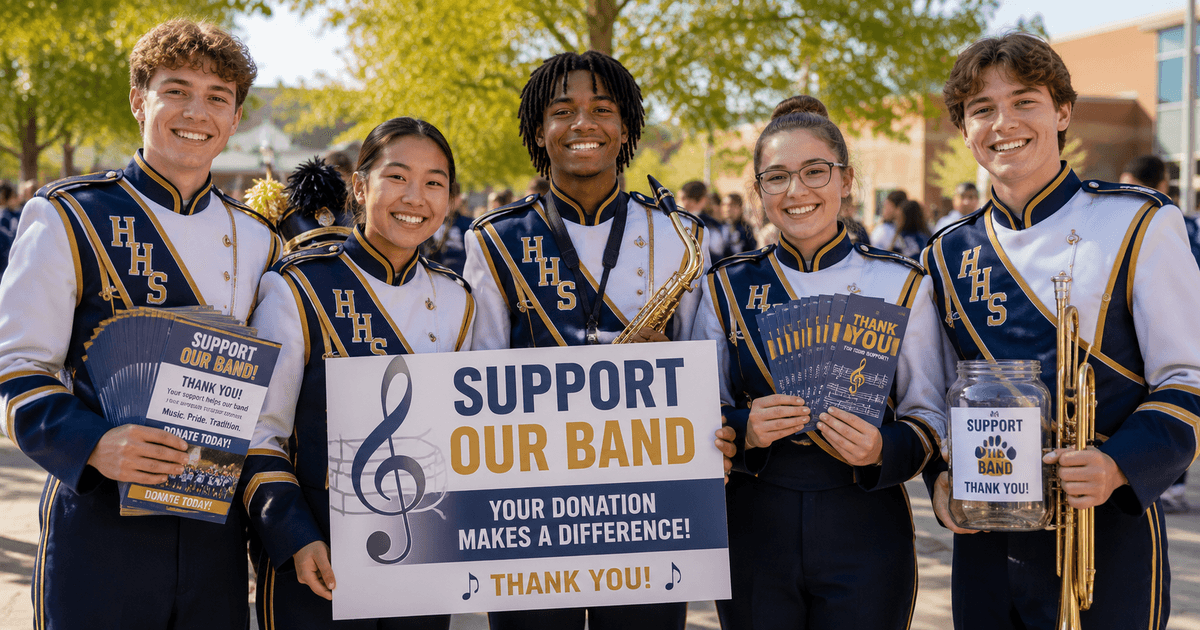
Fundraising for Bands: Best Ideas That Actually Work
Ask any band director about fundraising and you’ll get a familiar sigh. The candy bars sat in someone’s trunk for three weeks. The car wash made $180 after supplies. Half the popcorn tins came back unsold. Band programs need real money—for uniforms, instruments, travel, and competition fees—and most of the traditional fundraising playbook is badly matched to the job. This guide cuts through the noise: here are the best fundraising ideas for bands, ranked honestly by profit potential, time investment, and fit for typical programs, including the one angle almost no competitor bothers to mention.
Why Band Fundraising Is Different (and Harder)
Band programs operate on a different calendar and budget structure than most school activities. Marching season, concert season, and travel for competitions or festivals often hit in overlapping windows, which means fundraising has to start early and run efficiently. Unlike a sports team that might have gate revenue, bands rarely charge admission for their best performances.
On top of that, the parent volunteer base—often organized as a booster club—is doing double duty: logistics support at events and running fundraisers. That bandwidth problem makes it critical to choose fundraisers that don’t demand endless coordination.
The other reality: students range from middle schoolers who can’t drive to high schoolers with jobs and tight schedules. Any fundraiser that depends on door-to-door selling or in-person transactions is going to see uneven participation and frustrated parents. The best band fundraisers work around those constraints, not against them.
The 10 Best Fundraising Ideas for Bands
Here’s a straight look at what actually works, with honest notes on the tradeoffs.
1. Sock Fundraisers (Online, Zero Inventory)
Novelty and custom sock fundraisers have become one of the highest-ROI options for school groups in recent years—and they’re a natural fit for bands. Platforms like FundChamps let your band launch a free online storefront stocked with fun, high-quality socks. Supporters buy directly through a shareable link; products ship to them. The band keeps 50% of every sale with no upfront cost, no minimum orders, and no leftover inventory to manage.
What makes this different from candy or popcorn: socks don’t melt, don’t expire, and don’t require anyone to haul boxes. Parents share a link in a group chat and it’s done. It’s one of the few fundraisers that works just as well for a 40-person jazz band as it does for a 200-person marching program.
Tradeoff: Average order values are modest ($15–$30), so volume matters. Programs with active social networks see the best results.
2. Concert or Showcase Events
A ticketed performance—whether a holiday concert, spring showcase, or themed event—is a natural fit because the band is literally the product. With low overhead (you already have the venue and performers), net margins can be strong.
Tradeoff: Requires significant coordination: venue, promotion, ticketing, and volunteer staffing. Best run by an active booster organization.
3. Online Donation Campaigns
Platforms like DonorsChoose (for specific equipment needs) or a simple GoFundMe-style campaign can work well when paired with a clear, specific ask—“We need $3,200 for new concert uniforms”—and a compelling story. Transparency about where the money goes builds trust with donors.
Tradeoff: Donation fatigue is real. Works best once or twice a year with a genuine, specific need. Don’t run this alongside a product fundraiser simultaneously.
4. Spirit Wear and Custom Merchandise
Custom hoodies, t-shirts, and hats let supporters show pride while funding the program. Online print-on-demand platforms eliminate the inventory risk of traditional bulk orders.
Tradeoff: Margins on apparel can be lower than product fundraisers (20–35%), and design/setup takes time. Best as a supplement to a primary fundraiser, not a standalone.
5. Restaurant Nights (Dining Fundraisers)
A local restaurant donates 10–20% of sales on a specific evening when customers mention your band. Low effort, good for community visibility, and builds relationships with local businesses.
Tradeoff: Net dollars are typically modest ($200–$600) unless your community turns out in force. Treat this as a relationship-builder and supplemental income, not a primary fundraiser.
6. 5K Run / Walk Events
Community fun runs work well for larger programs with active booster clubs. Participants get pledges per lap or a flat registration fee. Sponsors can cover expenses if recruited early.
Tradeoff: High organizational lift. Best for programs with an established booster structure and a volunteer base willing to manage logistics.
7. Sponsorship Packages for Boosters and Local Businesses
Rather than one-off donations, a structured sponsorship menu—bronze, silver, gold tiers with perks like program ad space, banner placement, or social shoutouts—can generate reliable recurring revenue.
Tradeoff: Requires a dedicated point person to manage outreach, relationships, and fulfillment. High reward for programs willing to invest the upfront time.
8. Discount Card or Coupon Book Sales
Local businesses offer discounts; students sell the books to community members. Works best in tight-knit communities with strong local business buy-in.
Tradeoff: Requires significant lead time to recruit merchants. Participation is door-to-door, which many parents and students increasingly resist.
9. Grant Applications (Underused)
Organizations like Save the Music Foundation and state arts councils offer grants specifically for music programs. This isn’t fast money—grant cycles can take months—but it’s “free” revenue that doesn’t require selling anything.
Tradeoff: Competitive and time-consuming to apply. Best for programs with a director or booster parent willing to own the grant-writing process.
10. Raffle Fundraisers
Raffles are low-effort entry points—sell tickets for a donated prize (gift basket, event tickets, local experiences). Easy to run alongside a concert or school event.
Tradeoff: Check your state’s raffle laws. Some states require permits for raffles that involve cash or prizes over a certain value.
Fundraising for Bands: Why Parent Friction Is Your Biggest Enemy
How to Compare Band Fundraisers: A Simple Framework
Before committing to a fundraiser, run it through four questions:
- Profit per participant: How much does the program net if an average supporter spends $25?
- Time to cash: How many weeks from launch to money in hand?
- Participation barrier: Does it require in-person selling, driving, or physical logistics?
- Scalability: Can a supporter in another city participate?
Sock fundraisers score well on all four. Concert events score high on profit but low on time-to-cash and require significant coordination. Grants score high on profit-per-hour but require months of lead time. No single format wins on every dimension—most programs benefit from combining two or three.
For more on how other group types approach this tradeoff, see our guides for marching bands.
What the Best Band Booster Programs Do Differently
High-performing booster clubs don’t just run better fundraisers—they run fewer of them. Instead of five mediocre fundraisers a year that exhaust volunteers, they pick one or two and execute them well: clear goals, defined roles, a promotion plan, and a hard deadline.
They also diversify their revenue mix. A typical strong program might combine:
One online product fundraiser (socks, spirit wear) that runs for 3–4 weeks with zero overhead
One event-based fundraiser (ticketed concert or gala) that builds community and generates larger individual contributions
One institutional ask (grants or a local business sponsorship program) that doesn’t require student participation at all
That structure keeps any single channel from becoming a burnout point, and it means the program has revenue flowing in from multiple directions. For groups that share similar structural challenges—like elementary school fundraising or scout pack fundraising—the same diversified approach applies.
Starting a Sock Fundraiser With FundChamps: How It Works
FundChamps is a sock fundraising platform built specifically for groups like yours—school bands, boosters, scout troops, sports teams, and clubs. Here’s the model:
Free to launch. No setup fees, no minimums, no inventory to buy upfront.
50% profit on every sale. Your band keeps half of each purchase.
Online only. Supporters shop through your unique link from anywhere—no door-to-door, no catalog nights, no cash collection.
Ships direct. Products go straight to the buyer. You never touch a box.
Fun product. The socks are genuinely good—funny, cute, the kind of thing people actually want to buy, not just buy out of obligation.
It’s not a magic revenue solution—volume still matters, and a small program with a limited network will raise less than a large one. But for programs that are tired of unsold inventory and exhausted volunteers, it removes almost every traditional barrier to fundraising participation.
Ready to Raise More and Stress Less?
The best fundraiser for your band is the one your community will actually participate in. If you’ve been grinding through candy sales, car washes, and coupon books and feeling like you’re leaving money on the table—you probably are.
Launch a sock fundraiser at FundChamps and see what your band can raise with zero upfront cost, zero inventory, and 50% profit on every sale. It takes minutes to set up and your supporters can start buying the same day.
Frequently Asked Questions
What is the most profitable fundraiser for a band program? Sock fundraisers and online donation campaigns consistently rank highest for net profit per hour of effort. Sock fundraisers on platforms like FundChamps return 50% of every sale with zero upfront cost or inventory risk, making them one of the best options for most programs.
How much money can a band realistically raise? It depends on program size and participation. A 100-person marching band running an online sock fundraiser with active social sharing can realistically raise $3,000–$8,000 in a single campaign. Concert events and sponsorship packages can supplement that with an additional $1,000–$5,000.
What band fundraisers require no inventory or upfront cost? Online sock fundraisers, print-on-demand spirit wear, online donation campaigns, and grant applications all require zero upfront investment. Supporters order or donate directly, and the band receives its share after fulfillment.
How do band booster clubs manage multiple fundraisers at once? Most booster clubs designate one primary fundraiser per season and treat restaurant nights, raffles, or spirit wear as supplemental. Running too many simultaneously causes donor fatigue and splits volunteer bandwidth.
Are raffle fundraisers legal for school bands? Raffle legality varies by state. Some states require permits for raffles involving cash or prizes above a certain value. Always check your state’s charitable gaming or raffle laws before launching one.
What fundraisers work best when students can’t do door-to-door selling? Online-only fundraisers—shareable link campaigns like FundChamps sock storefronts, GoFundMe-style donation pages, or print-on-demand merchandise—are the best fit. A parent can share a link in a group chat in 30 seconds, and supporters anywhere can participate without in-person interaction.
Frequently Asked Questions
What makes band fundraising different from other school fundraisers? Band programs operate on a different calendar and budget structure than most school activities. Marching season, concert season, and travel for competitions or festivals often hit in overlapping windows, which means fundraising has to start early and run efficiently. Unlike a sports team that might have gate revenue, bands rarely charge admission for their best performances.
What is the best low-effort fundraiser for a school band? Sock fundraisers (online, zero inventory) are one of the highest-ROI options for school groups. Platforms like FundChamps let your band launch a free online storefront stocked with fun, high-quality socks. Supporters buy directly through a shareable link; products ship to them. The band keeps 50% of every sale with no upfront cost, no minimum orders, and no leftover inventory to manage.
How much can a band earn from a restaurant night fundraiser? Net dollars from restaurant nights are typically modest—$200–$600—unless your community turns out in force. A local restaurant donates 10–20% of sales on a specific evening when customers mention your band. Treat this as a relationship-builder and supplemental income, not a primary fundraiser.
How do I choose between band fundraiser options? Run each option through four questions: (1) Profit per participant—how much does the program net if an average supporter spends $25? (2) Time to cash—how many weeks from launch to money in hand? (3) Participation barrier—does it require in-person selling, driving, or physical logistics? (4) Scalability—can a supporter in another city participate?
Are there grants available specifically for music programs? Yes. Organizations like Save the Music Foundation and state arts councils offer grants specifically for music programs. This isn’t fast money—grant cycles can take months—but it’s revenue that doesn’t require selling anything. It’s best for programs with a director or booster parent willing to own the grant-writing process.
Do bands need a permit to run a raffle fundraiser? Check your state’s raffle laws. Some states require permits for raffles that involve cash or prizes over a certain value. Raffles are otherwise low-effort entry points—sell tickets for a donated prize such as a gift basket, event tickets, or local experiences—and are easy to run alongside a concert or school event.
Frequently asked questions
What is the best fundraiser for a school band?
Online sock fundraisers rank among the highest-ROI options for bands — programs keep 50% of every sale with no upfront cost, no inventory, and no door-to-door selling. Concert or showcase events and structured sponsorship packages are strong complements depending on your booster capacity.
How much money can a band fundraiser make?
It varies by format and participation. Restaurant nights typically net $200–$600, while sock or product fundraisers scale with your social network. Programs combining two or three formats — such as an online product store plus a ticketed concert — see the strongest overall results.
Why do traditional band fundraisers like candy and popcorn often fail?
Candy and popcorn require students to handle inventory, do door-to-door selling, and manage returns — which leads to uneven participation and unsold stock. Bands are better served by fundraisers with no physical logistics and a shareable online link anyone can use.
How do you run a band fundraiser without door-to-door selling?
Online fundraisers — such as custom sock stores, print-on-demand spirit wear, or donation campaigns — eliminate in-person selling entirely. Supporters receive a shareable link, purchase directly, and products ship to them, so neither students nor parents need to collect money or deliver goods.
Can bands get grants instead of running fundraisers?
Yes. Organizations like the Save the Music Foundation and state arts councils offer grants specifically for music programs. Grant cycles typically take months, so this isn't fast money, but it requires no selling and doesn't compete with other fundraising efforts.
How should a band booster club choose between fundraising ideas?
Evaluate each option on four factors: profit per participant, time to cash, participation barrier, and scalability. No single format wins on every dimension — most programs benefit from combining two or three, such as a zero-inventory online store for steady income plus a ticketed concert for larger seasonal revenue.
Related articles
The best fraternity fundraising ideas balance fast setup, real profit margins, and zero inventory headaches — here's what actually works.
Not all fundraisers are created equal — here's a data-backed breakdown of which formats deliver the highest profit margins and fewest headaches.
A practical, no-fluff guide to the best PTO fundraising ideas for schools—ranked by profit, effort, and what parents will actually support.

A practical, numbers-first guide to running a baseball sponsor-a-player fundraiser — including the one format most teams are still sleeping on.
Twenty-plus football fundraising ideas ranked by real-world profit, effort, and parent buy-in, including one zero-inventory option your boosters will actually love.
Discover the top 10 creative and impactful fundraising ideas for sororities and fraternities in 2024, featuring Fundchamps and hands-on activities.