Why Selling Items Beats Asking for Donations in Team Fundraising

Fundraising is a crucial part of maintaining and growing sports teams, especially sororities, fraternities, youth and amateur sports teams that often operate on tight budgets. Asking for donations works, especially when supporters already care about your team. But pairing that ask with something supporters can buy reaches people who would never give on their own. Here’s why selling items makes such a strong fundraiser:
1. Tangible Value for Supporters
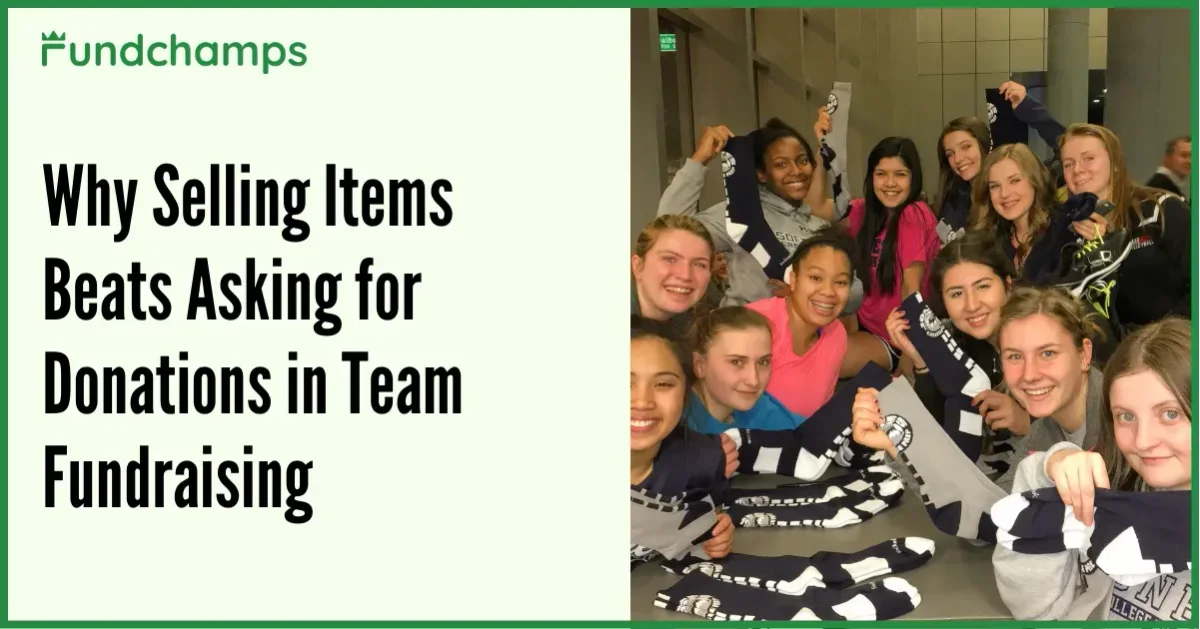
A Win-Win Scenario: When supporters purchase items, they receive something of tangible value in return for their contribution. This exchange is psychologically satisfying and makes them feel like they’re getting more for their money. For example, if a soccer team sells socks, supporters walk away with a useful product, which can be more appealing than just giving a donation.
Emotional Connection: Selling items, like jerseys or socks, helps create a stronger emotional connection between the supporter and the team. Every time they wear or use the item, they are reminded of the team and their support, reinforcing their loyalty.
2. Broader Appeal and Reach
Engaging a Wider Audience: Not everyone is inclined to donate money, but many people are happy to purchase a product—especially if it’s something they need or want. By selling items, teams can reach a broader audience, including people who might not normally consider making a donation.
Visibility Through Products: Products like socks, caps, or t-shirts act as mobile advertisements for the team. As supporters wear these items in their daily lives, they increase the team's visibility, potentially attracting more supporters and participants to future fundraising efforts.
3. Enhanced Motivation for the Team
Active Participation: Selling items involves active participation from the team members, which can boost their morale and investment in the fundraising process. For example, a youth basketball team selling socks might set up sales booths at games or events, giving players a direct role in the fundraising success. This active involvement often leads to higher motivation and a greater sense of achievement when goals are met.
Teamwork and Goal Setting: Fundraising through sales also fosters teamwork and goal setting. Teams can set targets for the number of items sold and work together to achieve them. This can be a more engaging and rewarding experience compared to passive donation requests.
4. Sustainability and Repetition
Recurring Fundraising Opportunities: Selling items is not a one-time event; it can be repeated multiple times throughout the season or year. A successful sales campaign can be run again with the same or new products. This sustainability makes it easier to meet long-term financial goals.
Building a Supporter Base: Over time, teams can build a loyal base of supporters who look forward to purchasing new items each season. This ongoing relationship is much harder to maintain with one-off donation requests.
5. Revenue Potential and Profit Margins
Higher Revenue Potential: The revenue potential from selling items is often higher than from donations alone. If a team sells 500 pairs of custom socks at $10 each, that’s $5,000 in revenue, which might be more than what they could raise by asking for donations.
Profit Margins: Teams can choose products with good profit margins, ensuring that a significant portion of each sale goes directly to funding the team’s needs. By carefully selecting high-quality, in-demand products, teams can maximize their profits.
6. The Role of FundChamps in Effective Team Fundraising
Fundraise Your Way: FundChamps lets your team sell socks or candles: you pick one product when you set up your fundraiser. Every team member gets a personal online store to share, and FundChamps handles payments and packs and ships every order, so teams can focus on connecting with supporters.
Why Socks? Socks are a perfect fundraising item. They are universally needed, easy to sell, and your team keeps 50% of every sale, $6–$8 per pair.
Easy to Manage: FundChamps gives teams tools to track sales, set goals, and manage the entire fundraiser from start to finish. That means less stress for team managers and more successful outcomes.
Conclusion
Selling items is a powerful strategy for sports teams. It offers tangible value to supporters, engages a wider audience, motivates the team, and provides repeatable revenue. With FundChamps, your team can sell socks or candles with no upfront cost, no inventory, and nothing to pack or ship.